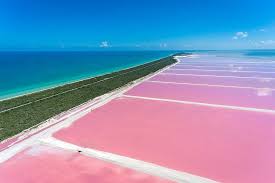
Playa Las Coloradas is a unique natural spectacle in Yucatán, famous for its stunning pink lagoons that contrast with the blue sky and the Caribbean Sea, offering surreal landscapes and rich biodiversity.
Ask AI about this beach
Instant answers about Playa Las Coloradas

Recomendaciones
🦠 Did you know...?
Un puñado de arena de playa contiene más microorganismos que personas en la Tierra, formando un ecosistema vital e invisible bajo tus pies.
About this beach
Table of contents
Introduction
As beach tourism experts, we have had the opportunity to explore countless coastal destinations around the world. However, few places have captivated us as much as Playa Las Coloradas on the Yucatán Peninsula, Mexico. This is not a conventional beach destination; here, the white sand and turquoise blue of the sea are just the backdrop for an extraordinary natural phenomenon: the famous intense pink lagoons. It is a place where nature paints itself in vibrant colors, creating an almost unreal landscape that invites contemplation and photography.
Las Coloradas is much more than a beach; it is a sanctuary for wildlife and a testament to the power and beauty of our planet. By visiting this magical corner of Yucatán, we enter a delicate ecosystem where salt extraction has given rise to these pink-toned lagoons, home to flamingos and other migratory birds. It is an immersive experience that challenges our expectations of what a 'beach' can be, inviting us to explore a landscape that seems taken from a dream.
How to Get to Playa Las Coloradas
Getting to Playa Las Coloradas is part of the adventure. Located in the far northeast of the Yucatán peninsula, this destination is a bit off the more traveled tourist routes, which contributes to its 'wild' charm.
From Mérida
If we depart from Mérida, the state capital, the car journey takes approximately 3 to 3.5 hours (about 230 km). The most common route is to take federal highway 176 east, passing through Tizimín, and then turn off towards Río Lagartos and finally to Las Coloradas. It is a scenic journey that passes through small towns and rural landscapes of Yucatán.
From Cancún or the Riviera Maya
For those coming from Cancún or the Riviera Maya, the journey is similar in duration, about 3 to 4 hours (approximately 200-250 km, depending on the starting point). Take federal highway 180 towards Valladolid and, from there, continue towards Tizimín and then to Río Lagartos and Las Coloradas. There are also organized tours departing from these points, offering a comfortable option for those who prefer not to drive. These tours often combine the visit to Las Coloradas with a boat ride through the mangroves of Río Lagartos.
Public Transportation
Public transportation is a more economical option, although it requires more time and patience. Buses can be taken from Mérida or Cancún to Tizimín, and from Tizimín, connect with colectivos or smaller buses heading to Río Lagartos and Las Coloradas. We recommend checking schedules in advance, as frequency may be limited.
The Sand and Water
When talking about Playa Las Coloradas, it is essential to distinguish between the coastal area and the famous pink lagoons. The 'beach' itself is a strip of fine, light sand, typical of beaches in Mexico and Yucatán beaches, that borders the Gulf of Mexico. The soil type is predominantly sand.
However, the real attraction is not swimming in the sea (which here is rather calm and emerald green, but not the main focus), but the contemplation of the saltwater lagoons. These lagoons are a spectacle of nature, with waters ranging from pale pink to intense fuchsia, depending on the salt concentration, the presence of microorganisms (such as brine shrimp), and the time of day. The high salinity makes these waters unsuitable for recreational bathing, and in fact, it is prohibited to protect the ecosystem and the local salt industry. The experience is purely visual and photographic, a delight for the senses that connects us with the uniqueness of this environment.
Services and Facilities
Given that Playa Las Coloradas is primarily a natural site of interest and a salt production area, the services and facilities are simpler and focused on the observation experience and the local community.
We found Parking available for visitors, generally managed by the local community. This facilitates access for those arriving by private vehicle or on tours. Near the entrance to the observation areas, there are small Chiringuitos and rustic Restaurants that offer fresh regional food, especially seafood and Yucatecan dishes. It is an excellent opportunity to try the local cuisine and support the community's economy.
There are also basic Bathrooms/WC available near the access and observation areas. It is important to remember that we will not find the typical services of a developed tourist beach, such as lifeguards, showers, or umbrella and sunbed rentals, as the focus here is appreciating the natural landscape and not swimming. The infrastructure is modest, but sufficient to enjoy the visit comfortably and respectfully towards the environment.
Best Time to Visit
For us, choosing the right time to visit Playa Las Coloradas is crucial to maximize the experience and appreciate the beauty of its pink lagoons in their full splendor.
The best time to visit is from November to May, coinciding with the dry season on the Yucatán Peninsula. During these months, the weather is cooler and drier, with clear skies that allow sunlight to shine directly on the lagoons, intensifying the pink color. Furthermore, with less rainfall, the salt concentration in the lagoons is higher, which also contributes to a more vivid coloration.
Ideal Time of Day
Within this window of months, the ideal time to visit is mid-morning (between 10:00 a.m. and 2:00 p.m.) or late afternoon (before sunset). During these hours, the sunlight is optimal for the pigments of the microorganisms in the water, such as brine shrimp, to r