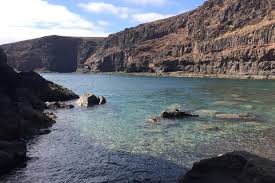
Playa del Juncal is a natural and wild spot in Agaete, Gran Canaria, characterized by its dark sand coves, pebbles, and crystal-clear waters, ideal for those seeking tranquility.
Ask AI about this beach
Instant answers about Playa del Juncal

Recomendaciones
🌗 Did you know...?
Las mareas muertas, las más suaves, ocurren cuando la Luna y el Sol forman un ángulo recto con la Tierra.
About this beach
Table of contents
Introduction
Today we delve into one of those hidden treasures that Gran Canaria jealously guards on its northwest coast: Playa del Juncal in the charming municipality of Agaete. Far from the hustle and bustle of major tourist beaches, this spot is a true gem for those seeking serenity, connection with nature, and the wild beauty of the Atlantic. It's not your typical beach, with umbrellas and chiringuitos everywhere, but a space where human intervention has barely left a trace, allowing its volcanic essence and untamed character to shine through.
When we talk about Playa del Juncal, we refer to a series of small coves and nooks that unfold along a stretch of coastline, offering breathtaking landscapes. Its crystal-clear waters invite you to dive into an underwater world full of life, while its unique combination of dark sand, pebbles, and volcanic rocks creates a natural mosaic that is a delight for the eyes. It's the perfect destination for a day trip, to recharge your batteries, or simply to enjoy the sound of waves breaking on the shore in an almost pristine setting. If you're looking for an authentic and memorable experience on the beaches of Gran Canaria, you've come to the right place.
How to Get to Playa del Juncal
Getting to Playa del Juncal is part of the adventure and, as is often the case with the most special places, requires a small effort that is undoubtedly worth it. The beach is located north of the town center of Agaete, following the GC-200 road towards La Aldea de San Nicolás, just after passing the well-known Puerto de las Nieves. However, don't expect prominent signage or direct car access right to the shore, as part of its charm lies precisely in its secluded nature.
By Car
The most comfortable way to get there is by car. From Las Palmas de Gran Canaria, take the GC-2 towards Agaete. Once in Agaete, follow the signs to Puerto de las Nieves and, from there, continue on the GC-200. After a few kilometers, you'll see some spots where you can park informally on the side of the road, just before the tunnels leading west. From these points, you'll need to start a footpath, not very long but with some slope and uneven terrain, that descends to the cove. It's crucial to park safely and respecting the rules, as the road is narrow and winding. We recommend wearing comfortable footwear suitable for walking on rocky terrain.
By Public Transport
If you prefer public transport, you can take a guagua (bus) from the Global line, such as the 103 or 101, from Las Palmas de Gran Canaria to Agaete or Puerto de las Nieves. Once there, the only option will be to walk. From Puerto de las Nieves, the walk takes approximately 20-30 minutes, following the GC-200. Although not excessively long, you should consider that the road may have traffic and that the final access to the beach is still via an unpaved path. It's an option for the more adventurous and those who enjoy coastal walks with spectacular views.
The Sand and Water
The uniqueness of Playa del Juncal is evident in its composition. It's not a beach of fine golden sand, but a fascinating mosaic of volcanic elements that give it a unique character. Here, the sand is mixed, predominantly dark, of volcanic origin, mixed with pebbles and cobbles of various sizes, polished by the incessant action of the sea. The type of ground is, therefore, mixed, with areas of more concentrated sand and others where rocks and pebbles take center stage. This diversity is not only aesthetically attractive but also speaks to the geological forces that have shaped the coast of Gran Canaria.
The waters that bathe Playa del Juncal are of astonishing clarity. Their turquoise blue color in contrast with the dark seabed and submerged rocks creates an impressive visual spectacle. Being a more sheltered cove, the waves are usually moderate, although it's always important to pay attention to sea conditions. The water temperature is pleasant for much of the year, inviting a refreshing swim. The clarity of its waters makes it an excellent place for snorkeling, allowing us to observe the rich marine life that inhabits the rocks and small reefs. Don't forget to bring your mask and snorkel to explore this small underwater paradise.
Services and Facilities
If you're looking for a beach with all the amenities, Playa del Juncal might not be your first choice. And precisely, the absence of major infrastructure is what makes it such a special destination for nature and tranquility lovers. Here, luxury is privacy, silence, and the pristine beauty of the surroundings. You won't find showers, public toilets, chiringuitos, or lifeguard service. It's a beach that invites us to be self-sufficient and to respect the environment to the utmost.
The only service we could consider is the possibility of informal parking on the shoulders of the GC-200 road, as mentioned earlier. However, this parking is not signposted or monitored, so we recommend caution and not leaving valuables in sight. Given the lack of services, it's essential to plan your visit in advance: bring enough drinking water, some food, sunscreen, a hat, and, of course, a bag to take away all the trash you generate. Let's help keep Playa del Juncal as pristine as we found it.
Best Time to Visit
Gran Canaria enjoys a privileged climate all year round, known as the 'eternal spring'. However, for