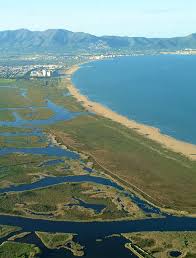
Playa de Can Comes is an extensive virgin sandy beach located in the heart of the Aiguamolls de l'Empordà Natural Park, ideal for nature lovers and water sports enthusiasts.
Ask AI about this beach
Instant answers about Playa de Can Comes

🐙 Did you know...?
Para picaduras de medusa, usa vinagre para aliviar el dolor. Nunca uses agua dulce ni frotes, ¡podría empeorar!
About this beach
Table of contents
Introduction
Today we explore one of those corners that remind us why we love the Costa Brava: Playa de Can Comes. This is not just any beach; it's a true hidden treasure within the majestic Aiguamolls de l'Empordà Natural Park, in the municipality of Castelló d'Empúries, in the beautiful province of Girona. If you're looking for a place where time seems to stand still, where the horizon merges with the vastness of the sea and nature is the absolute protagonist, you've come to the right place.
This extensive stretch of golden sand, with a distinctly virgin and wild character, offers a different beach experience. Here you won't find beach bars right on the sand or large crowds, but the peace and tranquility that only a protected natural environment can provide. It's a sanctuary for those seeking to disconnect, observe birds, wander aimlessly, or enjoy wind-powered water sports. Playa de Can Comes is, without a doubt, an invitation to adventure and the purest relaxation, a place where every visit becomes a deep connection with the essence of the Mediterranean.
How to Get to Playa de Can Comes
Getting to Playa de Can Comes is part of the adventure. Being located within a natural park, its access is not as direct as that of other urban beaches, which helps preserve its charm. We recommend planning your route to fully enjoy the journey.
The main access is usually via rural paths that cross the park. From Castelló d'Empúries or Empuriabrava, you should head towards the Aiguamolls area. There are several designated parking areas on the park's boundaries, from where you'll then have to continue on foot or by bicycle. A popular option is to park near the Cortalet farmhouse, the park's information center, or near Sant Pere Pescador, and from there follow the signs. The path is flat and pleasant, perfect for a walk or a bike ride, allowing us to enjoy the park's landscape and wildlife before reaching the beach. Remember that cars cannot go right up to the shore, which guarantees the tranquility and conservation of the environment.
The Sand and Water
Playa de Can Comes gifts us with sand of exquisite fineness, of a golden hue that shines under the Mediterranean sun. It's soft, pleasant-to-the-touch sand, perfect for laying out a towel and enjoying a sunny day. Its considerable length means you can always find a quiet spot, even on the busiest days.
As for the water, we find a Mediterranean sea with clear and generally shallow waters near the shore, making it relatively safe for swimming. However, being an open beach, there can be days with more pronounced waves, especially when the tramontana, the characteristic wind of the area, blows. It's important to note that, as with many natural beaches on the Costa Brava, you may find remains of Posidonia oceanica on the shore, a seagrass fundamental to the ecosystem and an indicator of good water health, which should not be confused with algae. We always value these details as part of the landscape's authenticity.
Services and Facilities
This is where Playa de Can Comes differs radically from more touristy beaches. Precisely, its charm lies in the absence of services and facilities we commonly find on other beaches. Don't expect showers, foot-washing stations, beach bars right on the sand, umbrella or sunbed rentals, or permanent lifeguard services. This is a beach for self-sufficiency.
We always advise bringing everything you need for your beach day: water, food, sunscreen, towels, and an umbrella if the sun is strong. It's also essential to remember that, being part of a natural park, we must be extremely respectful of the environment: do not leave any kind of waste and take back everything you bring. The only 'facility' you'll find is the parking at the park's access points, from where the path on foot or by bicycle to the shore begins. This simplicity is, for many, the true wealth of Playa de Can Comes.
Best Time to Visit
For us, Playa de Can Comes offers different charms depending on the time of year, and choosing the right moment can completely transform the experience.
- Spring (April-June): A magnificent time for nature lovers and birdwatching. The park is bustling, with thousands of migratory birds. The days are mild, perfect for walking and enjoying the beach's tranquility before the summer crowds arrive. The water is still cool, but the sun warms pleasantly.
- Summer (July-August): This is the busiest period, but thanks to its size and access, the beach never feels overcrowded. Temperatures are ideal for swimming and water sports. However, this is when the tramontana can blow strongest, which is a blessing for windsurfers and kitesurfers, but perhaps an inconvenience for those seeking a day of total sun and calm. We prefer the edges of the summer season (early July or late August) for a balance between good weather and fewer people.
- Autumn (September-October): Similar to spring, autumn gifts us with peaceful days, with temperatures still pleasant for walking and, sometimes, even for a swim. The park becomes a paradise for observing migratory birds again. The beach regains its atmosphere of total serenity.