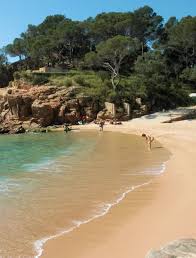
Cala de Canyet is a beautiful semi-virgin cove on the Costa Brava, known for its crystal-clear waters and its rocky, natural surroundings, ideal for those seeking tranquility and scenic beauty. It's a small hidden paradise nestled among pines and cliffs.
Ask AI about this beach
Instant answers about Cala de Canyet

🦶 Did you know...?
Caminar descalzo por la arena es un excelente ejercicio: fortalece los músculos del pie y mejora el equilibrio.
About this beach
Table of contents
Introduction
If there is one place that personifies the wild yet serene essence of the Costa Brava, that is, without a doubt, Cala de Canyet. Located in the charming municipality of Santa Cristina d'Aro, in the province of Girona, this cove is much more than a simple coastal corner; it's an experience, a sigh of peace amidst the vibrant Catalan coastline. We, as passionate beach tourism enthusiasts, always seek out those gems that, despite their beauty, manage to maintain an air of intimacy and authenticity. And Cala de Canyet fulfills this premise admirably.
As we approach Cala de Canyet, the feeling is that of discovering a little secret. Surrounded by lush Mediterranean vegetation and rock formations sculpted by time and the sea, its incredibly turquoise waters invite an immediate plunge. It's the kind of place where time seems to stand still, where the sound of the waves and the cry of seagulls become the perfect soundtrack for a day of disconnection. Don't expect the large crowds of other more urban beaches here; Cala de Canyet offers a refuge for those who value nature in its purest state and the tranquility of an almost virgin environment.
How to get to Cala de Canyet
Getting to Cala de Canyet is part of the adventure and charm that surrounds it. While it's not one of the most accessible coves on foot, the journey by car gifts us with spectacular views and prepares us for the beauty that awaits. We recommend taking the road from Sant Feliu de Guíxols or from Santa Cristina d'Aro towards the Rosamar urbanization, following the signs to the cove. The road is winding, with curves and descents that snake among pine trees, offering breathtaking panoramas of the Mediterranean.
Car access and parking
The main access is by car. Once we get close to the cove, we will find designated parking areas, although it's important to know that during the high season and summer weekends, it can be difficult to find a spot. The capacity is limited and sometimes we'll have to park a bit further away and walk the last few meters. Our advice is to arrive early, especially if we visit the cove during the months of July and August, to secure a good spot and enjoy the cove at its calmest moment. The walk from the parking lot to the sand is short and easy, but the path can be a bit uneven, so comfortable shoes are always a good idea.
The sand and the water
Cala de Canyet welcomes us with a combination of elements that make it unique. The sand here is not the fine, golden sand we find on other Costa Brava beaches, but a mix of coarse sand and small pebbles, which gives it a more natural and rustic character. This particularity is, for us, part of its charm, as it reminds us that we are in a genuine environment, little altered by human hands. Walking barefoot on it is a different experience, and the texture under our feet connects us even more with the surrounding nature.
But if there's something that truly captivates us about Cala de Canyet, it's its waters. They are, without exaggeration, of astonishing transparency. The intense turquoise color mixes with emerald tones, creating a visual spectacle that irresistibly invites a swim. The clarity of the water is such that we can easily see the seabed, making it a paradise for snorkeling lovers. The entry into the sea is gentle in some areas, but quickly the bottom becomes rockier, which adds interest and diversity to the underwater landscape. The water temperature, especially in the summer months, is very pleasant, perfect for cooling off and enjoying a long swim.
Services and facilities
As we've already mentioned, Cala de Canyet maintains a more natural and wild spirit, which means that services and facilities are more limited compared to urban beaches. However, this is not necessarily a drawback, but part of its appeal for those seeking to escape the hustle and bustle. We greatly value that its essence has been respected.
Regarding available services, during the summer high season, the cove usually has lifeguards, which gives us greater peace of mind when enjoying a swim, especially if we go with children. This is an important point to consider. Furthermore, it's common to find a chiringuito or a small establishment where we can have a cool drink, a coffee, or even enjoy a simple tapa or dish with sea views. It's a luxury to be able to enjoy a refreshment or an ice cream without having to move away from the shore.
It's important to note that Cala de Canyet does not have a Blue Flag, a distinction awarded to beaches with high standards of water quality, services, and environmental management. However, its cleanliness and the care of its surroundings are evident. It also does not have full accessibility for people with reduced mobility, due to its natural configuration and uneven terrain. As for pets, generally dogs are not allowed during the bathing season to ensure hygiene and comfort for all bathers. Our recommendation is to always bring everything we need (water, sunscreen, towels) and be respectful of the environment, always taking our waste with us.
Best time to visit
Choosing the right time to visit Cala de Canyet can make a difference in our experience. As beach experts, we always advise avoiding the high season if what we're looking for is tranquility and space, although each season has its charm.
High season (July and August)
During the months of July and August, the Costa Brava in general, and Cala de Canye