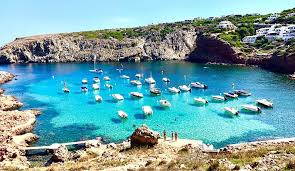
Cala Morell is a small, picturesque cove in northern Menorca, famous for its calm waters, rocky surroundings, and the fascinating prehistoric caves that surround it.
Ask AI about this beach
Instant answers about Cala Morell

Recomendaciones
🎶 Did you know...?
Algunas playas tienen "arena cantante" que emite sonidos al pisarla o frotarla, debido a su composición y forma.
About this beach
Table of contents
Introduction
We, as experts in Spain's coastal wonders, hold a special place in our hearts for Cala Morell, a hidden gem in northern Menorca. This cove, located in the municipality of Ciutadella, is much more than just a place to sunbathe; it's a portal to history, a sanctuary of tranquility, and a paradise for nature and sea lovers. Its crystal-clear waters, protected by rocky cliffs, invite calm and exploration, while its unique landscape, dotted with prehistoric caves, transports us to ancient times.
Cala Morell stands out for its serene atmosphere and rustic beauty. It's not the typical fine white sand beach one might expect from the Balearics, but a cove with character, with a mix of sand and rocky platforms that give it a unique personality. It's the perfect destination for those seeking to escape the hustle and bustle, immerse themselves in history, and enjoy the purity of the Mediterranean in an authentic setting. We love recommending it to travelers who appreciate tranquility, culture, and genuine experiences, away from crowds and mass tourist infrastructure.
How to Get to Cala Morell
Getting to Cala Morell is relatively straightforward, and the journey itself offers a first glimpse of Menorca's inland beauty. From Ciutadella, the nearest city and an important reference point, the distance is about 10-15 kilometers, which translates to approximately 15-20 minutes by car. We always recommend renting a vehicle in Menorca, as it's the most comfortable and flexible way to explore the island and its most secluded coves, including Cala Morell.
Directions from Ciutadella
To get there from Ciutadella, you need to take the Cala Morell road (C-721). The route is well signposted, which greatly facilitates access. As you approach the cove, you'll see clear signs towards the Cala Morell urbanization. The road will take you directly to the vicinity of the beach, where you'll find a parking area.
Parking
Cala Morell has several free parking areas near the cove and the urbanization. Although in high season it can be a bit more difficult to find a spot, the capacity is usually sufficient for the cove's regular visitors. Our recommendation is to arrive early in the morning, especially during July and August, to secure a good spot and enjoy the cove with fewer people.
Public Transport
During the summer months, there is a bus line connecting Ciutadella with Cala Morell, which is an excellent alternative for those who prefer not to drive. However, the frequency can be limited, so we always advise checking the updated schedules before planning your visit. While the bus is an economical and ecological option, the flexibility of a car allows you to explore the surroundings and other nearby coves with greater freedom.
Access on Foot or by Bicycle
For the more adventurous, Cala Morell is also accessible on foot or by bicycle via rural paths, although the journey can be long and demanding under the summer sun. It's an option we consider more suitable for experienced cyclists or hikers during milder temperatures. The Camí de Cavalls, the ancient path that circles the entire island, passes nearby, offering the possibility of arriving on foot from other coves or points along the coast, though not directly to the cove itself.
The Sand and Water
The uniqueness of Cala Morell begins with its very essence: the combination of sand and rock that defines its seabed and shores. Unlike other Menorcan beaches of fine white sand, here we find a mix of coarser-grained sand and areas of polished rock and natural platforms. This mixed character gives it a distinctive texture and appearance, which we find fascinating and very authentic. Children, and not-so-children, enjoy exploring the small pools that form among the rocks, teeming with marine life.
Type of Sand and Seabed
The type of sand at Cala Morell is predominantly mixed. On the shore, you'll find a strip of more compact sand and small pebbles, ideal for spreading out a towel. However, as you go into the water, or on the sides of the cove, rocky platforms and stone slabs shaped by the sea over the centuries predominate. This type of rocky seabed is precisely what makes Cala Morell an exceptional place for snorkeling, as the rocks harbor rich marine biodiversity.
The Waters of Cala Morell
The waters of Cala Morell are, without exaggeration, spectacular. Its location in a cove well protected from the prevailing northerly winds (the tramontana) ensures its waters remain almost always calm, like a natural swimming pool. The transparency is astonishing; you can see the seabed with exceptional clarity, which enhances the swimming and diving experience. The color of the water ranges from an intense turquoise blue to an emerald green, creating a beautiful contrast with the reddish and gray tones of the surrounding rocks.
The water temperature is generally pleasant during the summer months, allowing for prolonged and refreshing swims. Entry into the sea is gentle in the sandy areas, but in the rocky areas it may require a bit more caution. We always advise wearing water shoes, especially if you plan to explore the rocky areas or go snorkeling, as they will provide greater comfort and protection against possible slips or minor discomfort.
Marine Life
Thanks to the clarity and tranquility of its waters, and the presence of rocks and algae, Cala Morell is an ecosi