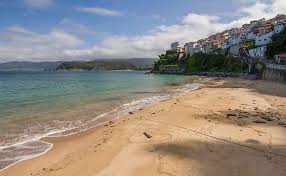
A beach of sand and pebbles located at the foot of the picturesque fishing village of Lastres, in Colunga, Asturias. It offers calm waters and spectacular views of the village and the port.
Ask AI about this beach
Instant answers about Playa de Lastres

Recomendaciones
🧭 Did you know...?
El Mar Cantábrico es técnicamente parte del Océano Atlántico, no un mar separado.
About this beach
Table of contents
Introduction
'Today we explore a corner of the Asturian coast that is more than just a beach; it's a complete experience: Playa de Lastres. Located at the foot of one of the most beautiful and emblematic fishing villages in Asturias, Lastres, this small cove offers a perfect combination of tradition, natural beauty, and tranquility. We're not talking about a vast expanse of golden sand typical of the Mediterranean, but rather an intimate and characterful space, where the murmur of the Cantabrian Sea mixes with the comings and goings of fishing boats and the charm of a village that seems frozen in time.
Playa de Lastres is not just a place to sunbathe or take a dip; it's a window into the authentic Asturian fishing life. From its shores, the view of the village cascading down the hillside, with its white houses and red roofs, is simply hypnotic. It's the kind of place that invites us to disconnect, to stroll without haste, and to feel the sea breeze while gazing at the horizon. For us, visiting the beach of Colunga that is Lastres is to immerse oneself in a living postcard, a setting that has captivated filmmakers and anyone seeking the essence of the north. Its serene atmosphere, especially outside the high season, makes it an idyllic destination for those who value authenticity and the beauty of coastal landscapes. It's a place where time seems to slow down, allowing us to appreciate every detail, from the sound of seagulls to the scent of salt spray that fills the air. The experience at Playa de Lastres is, without a doubt, a balm for the soul, a refuge where nature and culture merge in perfect harmony, offering us unforgettable memories.'
How to Get to Playa de Lastres
'Getting to Playa de Lastres is part of the adventure and charm of this Asturian destination. We always recommend taking the time to enjoy the journey, as the roads winding along the Asturian coast are a spectacle in themselves, offering panoramic views that prepare us for the beauty that awaits.
If we're coming from central Spain or other regions, the most comfortable way to arrive is via the A-8 motorway, known as the Autovía del Cantábrico. We must head towards eastern Asturias. Once on this motorway, we need to take the exit for Colunga and Lastres. The signs are clear and will guide us without problems.
As we approach the village of Lastres, the landscape begins to transform. The road descends a steep hillside, offering us spectacular and increasingly close views of the village, the port, and the Cantabrian Sea. It's a descent with sharp curves, so it's important to drive carefully and enjoy the panorama. This approach already gives us an idea of the unique character of the place, a village clinging to the mountain looking out to sea.
Parking in Lastres can be a challenge, especially during the high season (summer) or on weekends. The village is built on a hillside, and its streets are narrow and steep, making it difficult to find space. Our recommendation is to look for parking in the upper part of the village, where there are usually designated areas for it. Although this means leaving the car some distance from the beach, the walk is, in itself, part of the experience. From there, the descent to the beach is a pleasant walk on foot down the steep and picturesque streets, allowing us to admire the traditional architecture, the fishing village details, and the authentic atmosphere of the place. It's important to consider that, although the walk down is short and easy, the return is uphill. This may be a factor to consider for people with reduced mobility, baby strollers, or families with young children. Still, the effort is worth it to discover this treasure of the Colunga beach, a corner that rewards the traveler with its unique beauty.'
The Sand and Water
'When we talk about Playa de Lastres, it's important to highlight that it is not a typical fine, golden sand beach, as we might find in other latitudes. Its charm lies precisely in its uniqueness and the authenticity conferred by its nature. The composition of its beach is mixed: we find a combination of medium-grain sand and small pebbles or stones. This mix gives it a very natural and genuine appearance, typical of many coves of the Cantabrian Sea, where the force of the sea and coastal geology have shaped the landscape. Walking on it, we'll notice this texture under our feet, which can be a different experience if we're only used to soft sandy beaches. For us, this characteristic adds a wild and rustic touch to the landscape, integrating perfectly with the rocky and green surroundings of the Asturian coast. It's a beach that invites exploration, to search for shells and stones polished by the sea, and to enjoy the diversity of its surface.
As for the water, Playa de Lastres benefits from its sheltered location. Being nestled at the foot of the village and protected by the surrounding cliffs, the waters are usually remarkably calm and clear. This calm makes it an ideal place for swimming, even for those less experienced with the sea. The water quality is excellent, a reflection of the purity of the environment, and its clarity allows us to observe the seabed on calm days, revealing small fish and the life that inhabits the rocks. Although the temperature of the Cantabrian Sea is, as is known, cooler than that of the Mediterranean, in the summer months it is very pleasant and refreshing, offering relief from the summer heat. Furthermore, the absence of strong currents and the shallowness near the shore make it relatively safe, especially for the little ones, if we'