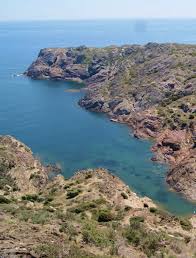
Cala Pedrosa is a small, secluded cove on the Costa Brava, accessible on foot or by boat, famous for its crystal-clear waters and pristine, natural atmosphere.
Ask AI about this beach
Instant answers about Cala Pedrosa

Recomendaciones
🌊 Did you know...?
Por cada 10 metros de profundidad, la presión del agua aumenta una atmósfera. ¡Es inmensa en el fondo marino!
About this beach
Table of contents
Introduction
Allow us to take you today to one of those corners that the Costa Brava, generous in beauty, still jealously guards: Cala Pedrosa in Palafrugell. For us, talking about Cala Pedrosa is to invoke the purest essence of this Girona coastline, a place where time seems to stand still and nature is revealed in its most pristine state. It is not your typical beach, with its rows of umbrellas and bustling chiringuitos; it is, rather, a natural sanctuary, a small paradise that requires an effort to be discovered, but richly rewards those who dare to seek it out.
Imagine a tiny cove, embraced by cliffs covered in pines that overlook the Mediterranean. Its waters, of astonishing transparency, invite you to dive in and explore an underwater world teeming with life. Cala Pedrosa beach is the epitome of tranquility, a refuge for the soul where the only sounds that accompany you are the gentle murmur of waves breaking on the shore and the cry of seagulls. It is the ideal place to disconnect, to reconnect with calm, and to admire the immense beauty bestowed upon us by the Costa Brava.
This enclave, although close to well-known tourist hubs like Calella de Palafrugell or Llafranc, maintains a surprising aura of isolation. Its access, exclusively on foot or by sea, has helped preserve its wild charm and avoid overcrowding. It is a favorite destination for those seeking a more authentic experience, who value the connection with the environment and enjoy the adventure of discovering hidden treasures. If you are looking for a beach where nature is the protagonist and serenity the dominant atmosphere, then Cala Pedrosa in Palafrugell is, without a doubt, a place you must add to your list of essentials.
How to Get to Cala Pedrosa
Getting to Cala Pedrosa is, in itself, part of the adventure and charm surrounding this corner. Forget about parking right by the sand or easy access; here, the journey is the first filter that ensures its exclusive character and tranquility. The most common and rewarding way to reach it is via the famous Camí de Ronda, a coastal path that runs along much of the Costa Brava and offers spectacular views at every step.
Access on Foot from Calella de Palafrugell
The most popular and perhaps the most scenic route starts from Calella de Palafrugell, specifically from El Golfet beach. Once there, you will find signs for the Camí de Ronda. The trail winds along the cliffs, offering impressive panoramic views of the coastline. The journey, although not excessively long (approximately 20-30 minutes), is of medium-low difficulty. There are sections with stairs and slopes, so we recommend wearing comfortable and suitable footwear for walking on uneven terrain. Along the way, we will pass through areas of Mediterranean pine forests and small natural viewpoints that will invite us to stop and contemplate the landscape. It is crucial to bring water, especially in the summer months, as you will not find any supply points until you reach the cove or return.
Access on Foot from Llafranc
Another option for hiking enthusiasts is to start the route from Llafranc. This path is a bit longer than the one from Calella de Palafrugell, but equally rewarding. From the Sant Sebastià lighthouse, an iconic point with panoramic views you shouldn't miss, the Camí de Ronda will guide us south. This variant is perfect for those who wish to combine the visit to the cove with a longer hike and the exploration of other nearby points of interest. As with the route from Calella, proper footwear and hydration are essential.
Access by Sea
For those who prefer sailing or are looking for a different experience, Cala Pedrosa is perfectly accessible by sea. It is a very popular destination for kayaking, paddle surfing, or small private boat excursions. From Calella de Palafrugell or Llafranc, you can rent kayaks and paddle to the cove. This option allows us to enjoy the coast from a unique perspective, exploring caves and corners inaccessible on foot. Furthermore, approaching by sea gives us a spectacular view of the cliffs protecting the cove, revealing its beauty in a completely different way. For boats, it is important to remember the anchoring regulations to protect the seabed.
The Sand and the Water
Upon arriving at Cala Pedrosa, the first thing that surprises us is the particularity of its shore. Do not expect to find a vast expanse of fine, golden sand, like that of other more urbanized beaches. Here, nature manifests itself in its most genuine state, offering us a composition that mixes coarse sand with pebbles and small rounded stones. It is a different tactile experience, connecting us directly with the geology of the Costa Brava. This particularity means that, although it may not be the most comfortable sand to lie on without a thick towel or mat, the charm of the cove is not diminished at all; on the contrary, it gives it an even more authentic and wild character.
But if the sand and pebbles of the shore have their own appeal, it is the water of Cala Pedrosa that is the true protagonist, the diamond of this corner. With astonishing transparency, its hues range from an intense emerald green near the shore to a deep blue in the more distant areas. This crystal-clear clarity is an irresistible invitation to dive in and discover the vibrant underwater world it hides. The absence of strong currents and the protection of the cliffs mean its waters are usually calm, creating a perfect natural pool for swimming and, above all, for practicing water activities like snorkeling or diving.
The water quality