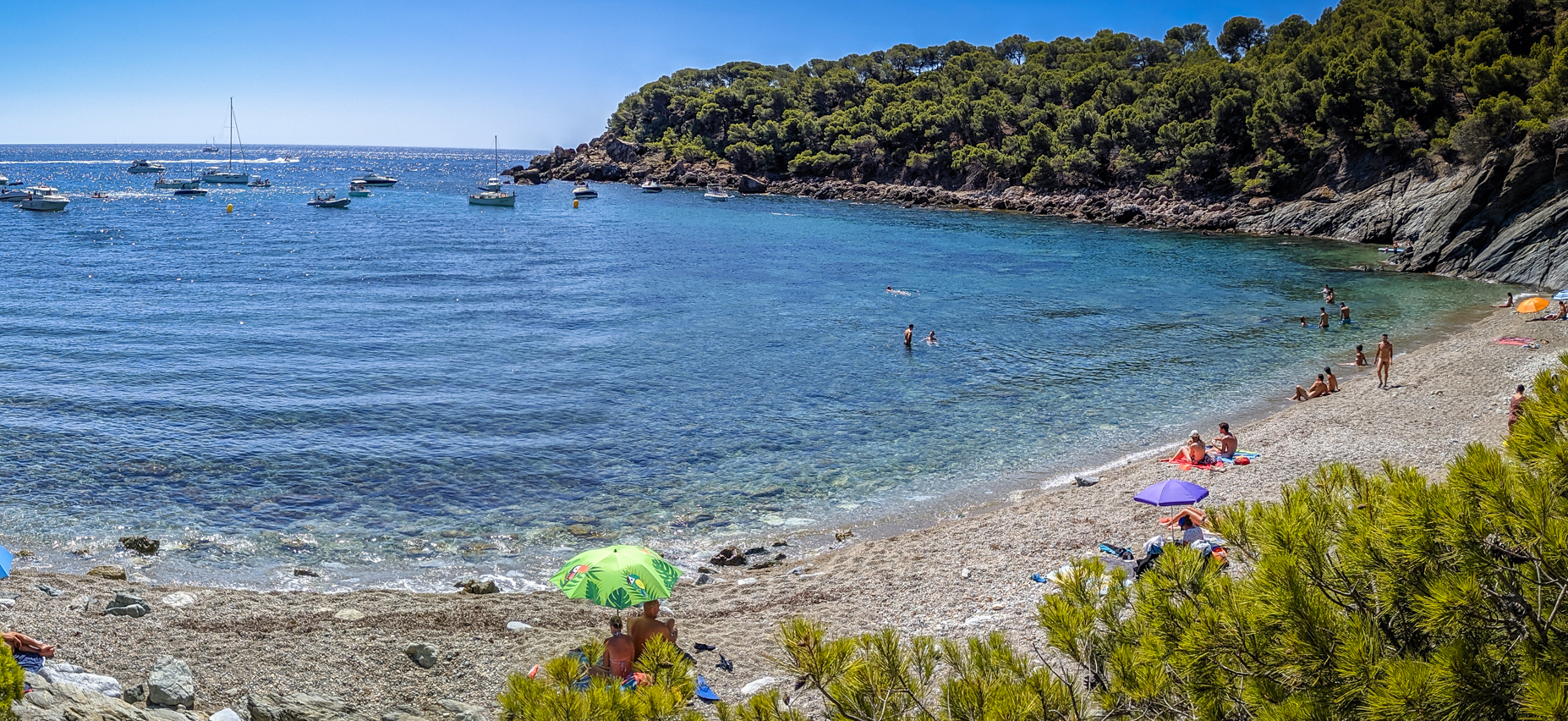
Cala Murtra is a secluded, natural cove in Roses, Girona, known for its crystal-clear waters and peaceful atmosphere, ideal for naturism.
Ask AI about this beach
Instant answers about Cala Murtra

🌊 Did you know...?
Por cada 10 metros de profundidad, la presión del agua aumenta una atmósfera. ¡Es inmensa en el fondo marino!
About this beach
Table of contents
Introduction
Welcome to a corner of the Costa Brava where time seems to stand still and nature is displayed in its purest state. Today we take you to Cala Murtra, a true hidden gem in the municipality of Roses, in the beautiful province of Girona. If you're looking for a beach experience away from the hustle and bustle, where tranquility and connection with the surroundings are the main attractions, this cove is undoubtedly your ideal destination. We, as beach tourism experts, have been captivated by its unique charm.
Cala Murtra is not just any beach. It's a refuge for those who appreciate wild beauty and freedom. With its hypnotic blue waters and a seabed that invites exploration, this cove has earned its reputation as one of the last bastions of peace on a coast as busy as Catalonia's. It is also a reference point for naturism enthusiasts, who find here a space of respect and harmony to enjoy the sun and sea without barriers.
How to Get to Cala Murtra
Getting to Cala Murtra is part of the adventure, and precisely that slight difficulty in access is what helps preserve its virgin essence. We are in the municipality of Roses, and from here, the path becomes slightly less defined to offer a more authentic experience. To get there, the most common way is to drive towards Cap de Creus, following the signs to Cala Montjoi or the Far de Roses. At some point along the road, we'll find a small area where we can park the vehicle, although it's worth noting that the parking is not signposted as such and is limited, so in high season it can be a challenge to find a spot. From this point, the real journey on foot begins.
The descent to the cove is via an unpaved trail, a section of the famous Camino de Ronda that winds along the coast. This path, although not excessively long—we estimate about 15-20 minutes of walking—does have certain irregularities and slopes. Therefore, we always recommend wearing comfortable and appropriate footwear, such as trekking shoes or sneakers, and avoiding flip-flops if you don't want any scares. The trail offers spectacular views of the coast, turning the journey into a visual prelude to the beauty that awaits us. The reward, upon reaching the cove, is immense: an idyllic landscape that more than compensates for the effort invested. It's important to remember that the return trip involves climbing this same path, so we should save energy, especially on the hottest days.
The Sand and Water
Once at Cala Murtra, the first thing that catches our attention is the particularity of its surface. Here you won't find the typical fine, golden sand that characterizes other beaches. Instead, the cove's bed is a mixture of coarse sand and pebbles, the result of the erosion of the surrounding rocks. This composition gives it a more rustic and natural character, and although it may be a little less comfortable for laying a towel directly on, it's precisely what gives it that wild and authentic touch we love so much. For greater comfort, we usually bring a mat or a thicker towel.
But if the sand is special, the water at Cala Murtra is simply spectacular. We're talking about crystal-clear waters of turquoise and emerald color, whose transparency is such that it allows you to observe the seabed with astonishing clarity. This characteristic makes it a paradise for snorkeling and diving enthusiasts. Diving into its waters is like entering a natural aquarium: marine life is abundant, with fish of various species swimming among the rocks and seagrass meadows. The water temperature, typical of the Costa Brava, is refreshing in summer and very pleasant in the spring and autumn months. The absence of strong currents and its sheltered location mean its waters are generally calm, contributing to a very pleasant swimming experience.
Services and Facilities
As we've already mentioned, Cala Murtra is a virgin beach, and that implies an almost total absence of services and facilities. And, honestly, it's precisely that lack of infrastructure that makes it so special and helps preserve its natural essence. Here you won't find showers, chiringuitos, public toilets, or lifeguard service. There is also no rental of umbrellas or sunbeds, nor designated sports or children's areas. It's a cove that invites total disconnection and self-sufficiency.
This characteristic is something we always highlight, as it's essential for planning your visit. We always recommend that visitors bring everything they need for the day: plenty of water, some food or a picnic, sunscreen, a cap or hat, sunglasses, and, of course, a bag to collect all your waste. It's crucial to be responsible with the environment and not leave any trace of our visit. The beauty of Cala Murtra lies in its virginity, and it's everyone's responsibility to keep it that way. The experience is closer to a nature excursion than a conventional beach day, and that's precisely what makes it so attractive to certain types of travelers.
Best Time to Visit
Choosing the best time to visit Cala Murtra is key to fully enjoying its charm. Based on our experience, we advise you to avoid the months of July and August if you're looking for absolute tranquility. During the peak summer season, although the cove remains less crowded than other beaches in Roses, the influx of visitors increases considerably, and finding parking and a good spot on the sand can be more challenging.
Our