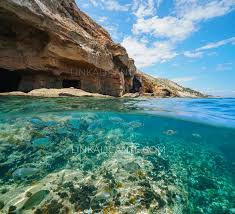
Cala de la Cova Tallada is a unique natural enclave, famous for its impressive sea cave carved into the cliff and its crystal-clear waters, ideal for adventure and snorkeling.
Ask AI about this beach
Instant answers about Cala de la Cova Tallada

Recomendaciones
🐙 Did you know...?
Para picaduras de medusa, usa vinagre para aliviar el dolor. Nunca uses agua dulce ni frotes, ¡podría empeorar!
About this beach
Table of contents
Introduction
Today we delve into one of those corners that the Costa Blanca guards jealously, a true gem for lovers of nature, adventure, and breathtaking landscapes: Cala de la Cova Tallada. Located in the impressive Montgó Natural Park, right on the natural border between the municipalities of Jávea and Denia, in the province of Alicante, this cove is not your typical beach, but a spectacular rocky enclave crowned by a sea cave of historical origin. Its name, 'Cova Tallada' (Carved Cave), refers to the ancient 'tosca' stone quarry that was once here, from which material was extracted to build, among other things, the majestic Castle of Denia.
This place offers us a completely different experience from the more crowded beaches. Here, the reward of reaching its turquoise waters and exploring its depths is directly proportional to the effort required to access it. It is a destination for those seeking to disconnect, live a small expedition, and immerse themselves in an almost virgin natural environment, where the sound of the waves and the song of birds are the only soundtrack. While it lacks the comfort of traditional beach services, its charm lies precisely in that wild authenticity that invites us to exploration and respect for the environment. Get ready for an adventure that will leave us with unforgettable memories and postcard-worthy photographs.
How to Get to Cala de la Cova Tallada
Getting to Cala de la Cova Tallada is already part of the adventure, and it's crucial to plan well, as it is not an easily accessible place. There are mainly two walking routes and the option of arriving by sea, each with its own particularities. We recommend the route that best suits our physical condition and sense of adventure.
Walking Access from Denia
The most well-known route, and perhaps the one offering the most spectacular views, starts from the vicinity of the Torre del Gerro in Denia. We'll leave the car in the designated parking near the tower and begin the descent. The path is a rocky trail, sometimes steep and with exposed sections, that winds along the cliff. It is essential to wear appropriate footwear (hiking shoes or sports shoes with good grip), water, sun protection, and, if possible, hiking poles, especially for the return journey, which is uphill. The descent can take between 30 and 45 minutes, depending on pace and experience. As we go down, the views of the Mediterranean and the cliffs of Montgó are simply stunning, inviting us to stop and enjoy the landscape.
Walking Access from Jávea (Cap de Sant Antoni)
Although less frequented for direct access to the cove, it is also possible to approach from the Cap de Sant Antoni in Jávea. This route is longer and, in some sections, can be more complex, as it involves walking part of the trail that borders the cliff until reaching the Torre del Gerro area, and from there, taking the turnoff to the cove. This option is more for experienced hikers who wish to combine the visit to the cove with a longer route through the Montgó Natural Park. It's important to remember that the final access to the cove from any point is a steep and rocky descent.
Access by Sea
For many, the most comfortable and rewarding way to reach Cala de la Cova Tallada is by sea. We can rent a kayak or a paddleboard in the Port of Jávea or in Les Rotes (Denia) and paddle to the cove. This option allows us to enjoy the coast from a unique perspective, exploring small caves and rock formations along the way. The kayak trip from Les Rotes, for example, is about 30-40 minutes of calm paddling, skirting the cliffs. It is essential to check the weather forecast and sea conditions before setting out, as a day with waves can turn the crossing into a dangerous challenge. Furthermore, this option allows us to access directly inside the cave with our vessel, a truly unforgettable experience. Remember we are in a Marine Reserve, so we must be extremely respectful of the environment.
The Sand and Water
When talking about Cala de la Cova Tallada, it's important to clarify that we are not dealing with a typical fine-sand beach. Its 'beach' is actually a small expanse of rocky terrain and pebbles, with some areas of coarser sand and boulders. The ground is predominantly rock, which requires us to wear water shoes or booties to move comfortably and safely. This rocky characteristic, far from being a drawback, contributes to the transparency and purity of its waters.
What truly captivates us about Cala de la Cova Tallada is the quality of its water. We find a true paradise of crystal-clear waters, of an intense turquoise and emerald color, inviting us to dive in without a second thought. Underwater visibility is exceptional, making it an ideal place for snorkeling and diving. The marine fauna is abundant and varied, and we can observe everything from small rockfish to colorful schools of sargo and sea bream, octopuses, and starfish. The submerged rock formations create a fascinating underwater landscape, full of nooks, crannies, and small caves to explore. The feeling of swimming in these waters, with the imposing mouth of the cave behind us, is something we won't easily forget.
Services and Facilities
If we are looking for a beach with all the comforts, Cala de la Cova Tallada is not our destination. Precisely, its charm lies in its wild and virgin character. Being a protected natural enclave with difficult access, it completely lacks services and facilities. This means we will not find:
- Showers or toilets/WCs.
- Beach bars or restaurants.
- Lifeguard service.
- Umbrella and sunbed rentals.
- Sports or children's areas.
- Direct parking (the car is left at a certain distance from the starting points of the routes).
Best Time to Visit
Choosing the best time to visit Cala de la Cova Tallada is crucial to fully enjoy the experience. We always advise avoiding the peak season months, such as July and August, for several reasons:
- Overcrowding: Although access is complicated, the cove's popularity has grown, and in summer there can be too many people, which detracts from the charm of a place that seeks tranquility and connection with nature.
- High Temperatures: The access path, especially the one from Denia, is quite demanding and becomes very tough under the midday sun in the height of summer. Sun exposure is high and the risk of sunstroke or dehydration increases considerably.
- Parking Difficulty: The parking lots near the starting points of the routes fill up quickly.
Activities and Sports
Cala de la Cova Tallada is a true paradise for lovers of outdoor activities and water sports. It is not a place to lie on a towel, but to explore and live the adventure. We feel like true explorers on every visit.
Kayak and Paddle Surf
Undoubtedly, one of the star activities is kayaking or paddle surfing. Renting one of these vessels allows us to paddle from the nearby beaches of Les Rotes in Denia or the Port of Jávea, enjoying stunning views of the Montgó cliffs. Once at the cove, we can access directly inside the Cova Tallada, a magical experience. Paddling through its galleries, illuminated by beams of light filtering through the openings, is something you have to experience. It's important to be cautious and respectful of other visitors inside the cave.
Snorkeling and Diving
The crystal-clear waters and rich marine life make Cala de la Cova Tallada an exceptional place for snorkeling and diving. With a mask, snorkel, and fins, we can spend hours exploring the fascinating underwater world. The Cabo de San Antonio Marine Reserve, to which this area belongs, ensures notable biodiversity. We can swim among schools of fish, discover octopuses hidden in the rocks, and marvel at the submerged rock formations. For the more experienced, scuba diving offers the opportunity to explore at greater depth, discovering the richness of the Costa Blanca seabed.
Cave Exploration
The Cova Tallada itself is an activity. Once inside, we can explore its different rooms and galleries. It is an ancient 'tosca' stone quarry, a golden-colored sandstone used in the construction of many emblematic buildings in the area, including the Castle of Denia and the Church of San Bartolomé in Jávea. The cave is large and has several entrances and exits to the sea. With a flashlight (essential!), we can venture into the darker areas and feel the history of the place. Caution is needed on wet and slippery rocks, and we must respect the natural formations. Some areas of the cave have small interior 'lakes' of saltwater, perfect for a refreshing dip.
Hiking
As mentioned in the 'How to Get There' section, walking access is an activity in itself. The routes from Denia or Jávea are moderate-to-high difficulty trails that offer spectacular panoramic views of the Mediterranean and the Montgó Natural Park. It's an excellent way to combine physical exercise with contemplation of nature. Remember to wear appropriate footwear and bring enough water.
For Families with Children
When thinking about Cala de la Cova Tallada and families with children, our recommendation is to be cautious and consider the age and experience of the little ones. This is not a 'family' beach destination in the traditional sense, with soft sand and easy access. It is a place for adventure, and as such, presents certain challenges.
Challenges for Young Children
- Complicated Access: The walking routes are steep, rocky, and, in some sections, can be slippery and exposed