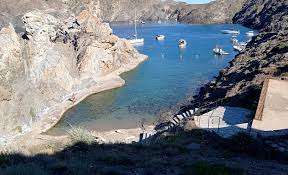
Cala Culip is a remote and wild cove in the heart of the Cap de Creus Natural Park, famous for its wind-sculpted rocky landscapes and crystal-clear waters, ideal for total disconnection.
Ask AI about this beach
Instant answers about Cala Culip

🐠 Did you know...?
Los peces loro y las estrellas de mar son clave para la salud de los ecosistemas costeros. No los toques.
About this beach
Table of contents
Introduction
Imagine a corner where nature shows itself in its purest state, a place where time seems to stand still and the landscape becomes a work of art sculpted by the elements. This is Cala Culip, a hidden gem in the northeastern tip of the Iberian Peninsula, in the heart of the Cap de Creus Natural Park, within the municipality of Cadaqués, in the province of Girona. For us, beach tourism experts, Cala Culip is not simply a beach; it is an experience, a destination for those seeking the true essence of the wildest and most authentic Costa Brava.
This cove, of breathtaking beauty, has been a muse for artists and a refuge for adventurous souls. Its whimsical rock formations, shaped by the tramuntana wind over millennia, create a lunar landscape that blends with the intense blue of the Mediterranean. It is a place where silence is only broken by the murmur of the waves and the cry of seagulls. A natural sanctuary that invites us to disconnect, to explore, and to marvel at the grandeur of nature. Get ready for a journey to one of the most emblematic and least explored places on the Catalan coast.
How to Get to Cala Culip
Getting to Cala Culip is, in itself, part of the adventure and charm of this place. Do not expect easy access or a paved road that leads directly to the shore; in fact, that is precisely one of its greatest virtues. Its isolation is what has allowed it to preserve its pristine state and its atmosphere of unaltered peace. It is important that you are well prepared for the journey, as it is not just any walk.
The main access, and the most common for hiking enthusiasts, is via the GR 92, the famous long-distance trail that runs along the entire Mediterranean coast. From Cadaqués, the path is long and winding, offering spectacular views of the coastline. We recommend starting the route early in the morning, especially in the warmer months, to avoid the most intense sun. The trail is of medium-high difficulty, with rocky sections and slopes, so good trekking footwear is essential. The walk can take between 2 and 3 hours from Cadaqués, depending on your pace and stops to admire the landscape. You will pass by coves like Cala Jugadora or Portlligat, before entering the wildest area of Cap de Creus.
Another option to reach this beach in Girona is by sea. For many, this is the most comfortable and spectacular way to access Cala Culip. You can rent a boat in Cadaqués or Portlligat, or book one of the boat excursions offered by local companies. Arriving by sea will allow you to contemplate the majesty of the cliffs and rock formations from a unique perspective, landing directly in the crystal-clear waters of the cove. It is an excellent alternative for those who prefer to avoid the hike or for those seeking a more exclusive and relaxed experience.
It is essential to remember that, regardless of the method you choose, planning is key. Bring enough water, sun protection, some food, and, of course, a camera to immortalize the landscapes. The reward of reaching Cala Culip, after the effort, is a sense of achievement and the opportunity to enjoy an almost private paradise.
The Sand and the Water
When we talk about the 'sand' of Cala Culip, it is important to clarify that we are not referring to an extensive carpet of fine, golden sand like the one we might find on other Costa Brava beaches. Cala Culip is, in its purest essence, a cove of pebbles and rocks. The floor of the cove is mainly composed of small rounded stones and boulders, polished by the constant ebb and flow of the sea and the elements. These rocks, of varied shapes and colors, give the cove a distinctive character and a unique texture under our feet. It is advisable to wear water shoes or suitable footwear to walk comfortably on the pebbles and to enter the water without discomfort.
But if the ground is rocky, the true treasure of Cala Culip lies in its waters. Oh, the waters of Cala Culip! They are, certainly, one of its greatest attractions. Of astonishing transparency, their hues range from emerald green in the shallower areas to an intense, deep blue further out to sea. This crystal clarity is largely due to the absence of fine suspended sand and the abundant marine life that inhabits its rocky seabed. It is a true open-air natural aquarium.
The water quality is exceptional, inviting us to dive in and explore. The temperature is usually pleasant in the summer months, although it can be a bit cooler than in other more sheltered beaches due to its location open to the sea. The purity of these waters makes them an idyllic place for snorkeling and diving. With just a mask and a snorkel, you can discover a fascinating underwater world: fish of various species, starfish, anemones, and rich marine vegetation carpeting the submerged rocks. Visibility is usually excellent, allowing us to fully enjoy the biodiversity of Cap de Creus.
For us, the contrast between the austerity of the rocky landscape and the exuberance of its waters is what makes Cala Culip such a special and memorable place. It is a reminder of the untamed force and beauty of the Mediterranean nature.
Services and Facilities
If you are looking for a beach with all the amenities, beach bars, lifeguards, showers, and sunbed rentals, we must be honest: Cala Culip is not your destination. And that is precisely one of the reasons we value it so much. This virgin beach in Cadaqués is characterized by its total lack of services and facilities.
[Content truncated]